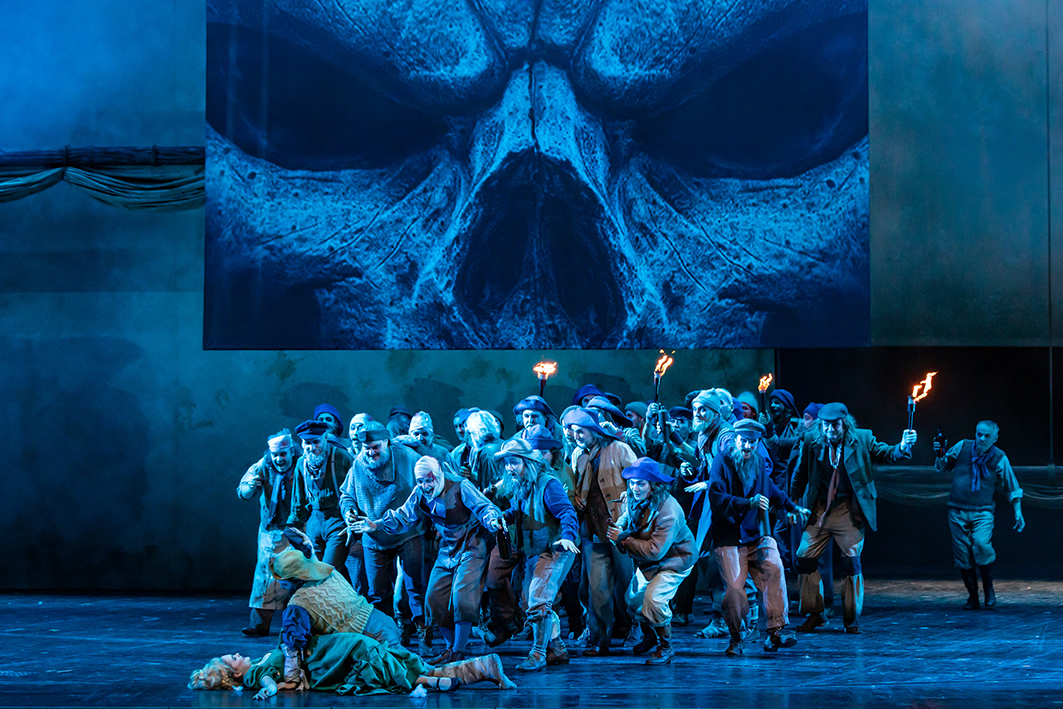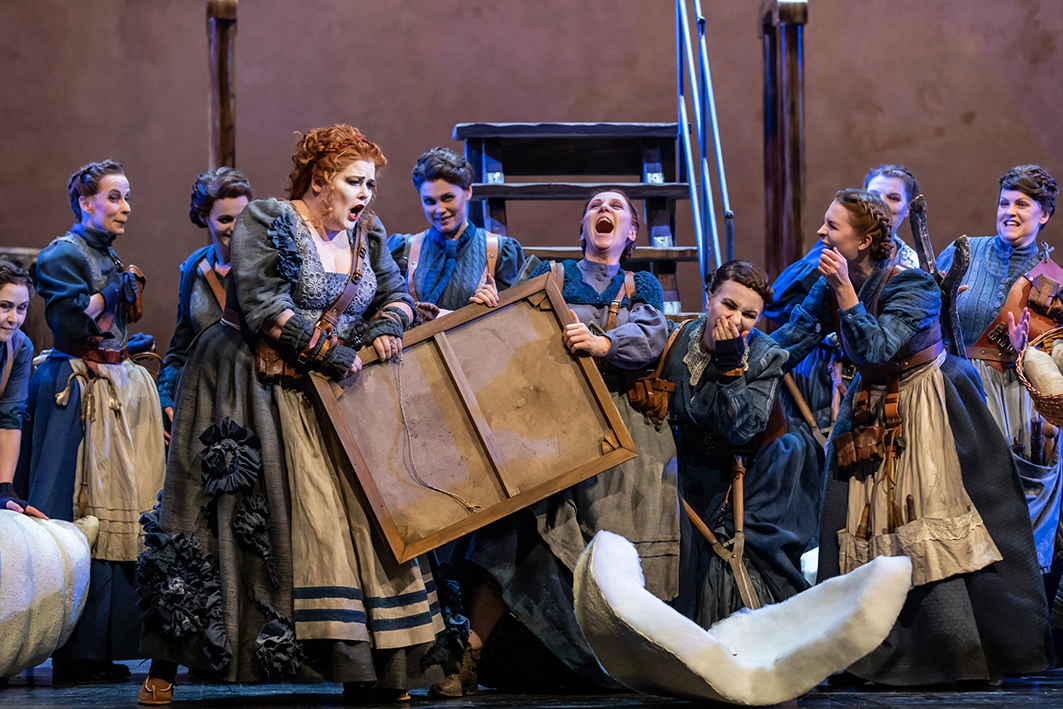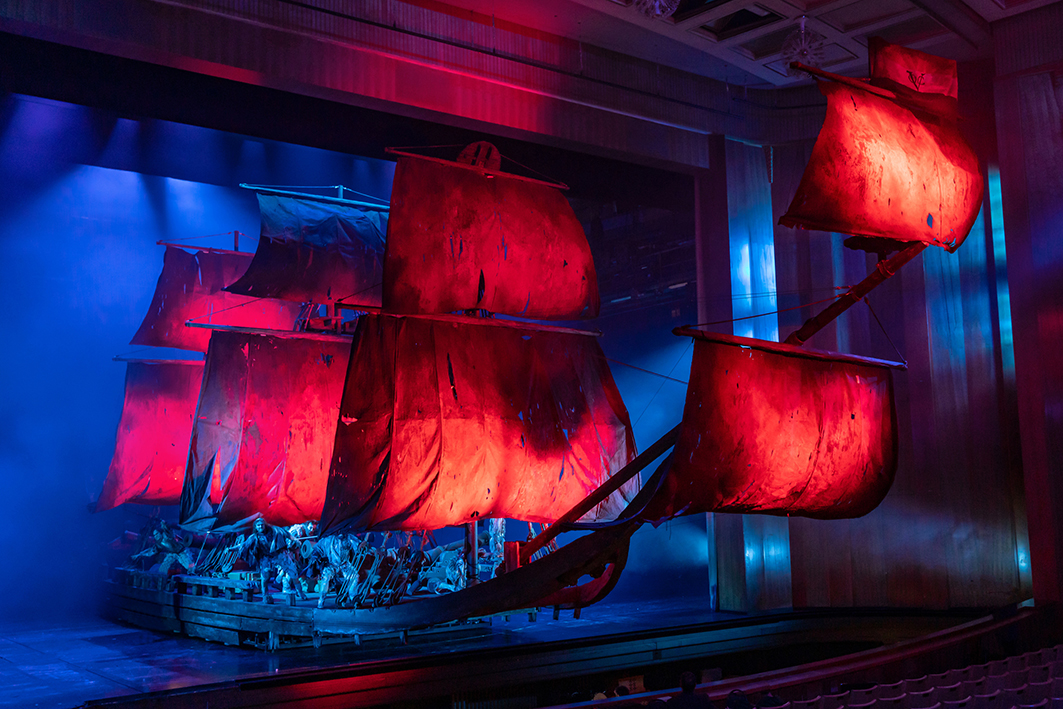
For all eternity, the Flying Dutchman is doomed to sail the world’s oceans on his ghost ship, without rest, without a destination. Only once every seven years is he allowed to go ashore to seek redemption: in a »woman who remains faithful to him on earth until death«. Senta, the captain’s daughter, who feels suffocated by social conventions and the confines of village life, believes herself chosen to break this curse. When her father Daland returns from sea with a mysterious stranger at his side, she immediately recognises the damned man from that sombre sailor’s ballad her nurse once sang to her, and severs the last ties to the life laid out for her with her suitor Erik.
Following his three early works, Richard Wagner regarded »The Flying Dutchman«, which premiered in 1843, as his first truly significant work. By introducing the supernatural and demonic forces of nature into reality, he drew on the tradition of Gothic Romantic opera and, through the motif of redemption, embarked on a path that would shape his subsequent music dramas. Wagner condenses the stormy surging of the sea, wild sailors’ choruses and Senta’s central ballad into an atmospheric thriller that captivates from the very first note. Michiel Dijkema, who most recently delighted audiences in Leipzig with his moving interpretation of »Rusalka«, tells in his production a story of the search for home, but also of the longing for the Other.