Today's opera house, situated on the Augustusplatz, opened in 1960 as the only new opera building in the GDR, is a captivating, cohesive work of art in the architecture and interior design of the 1950s. The trapezoidal auditorium in the form of a single-aisle theatre offers a total of 1273 seats. It impresses with its excellent acoustics and outstanding views from every seat.
Venue Opera House
Architecture
History of the Oper Leipzig
The opera house is the Oper Leipzig's venue for opera and ballet and is part of the tradition of over 325 years of musical theatre care in Leipzig.
History Leipzig Ballet
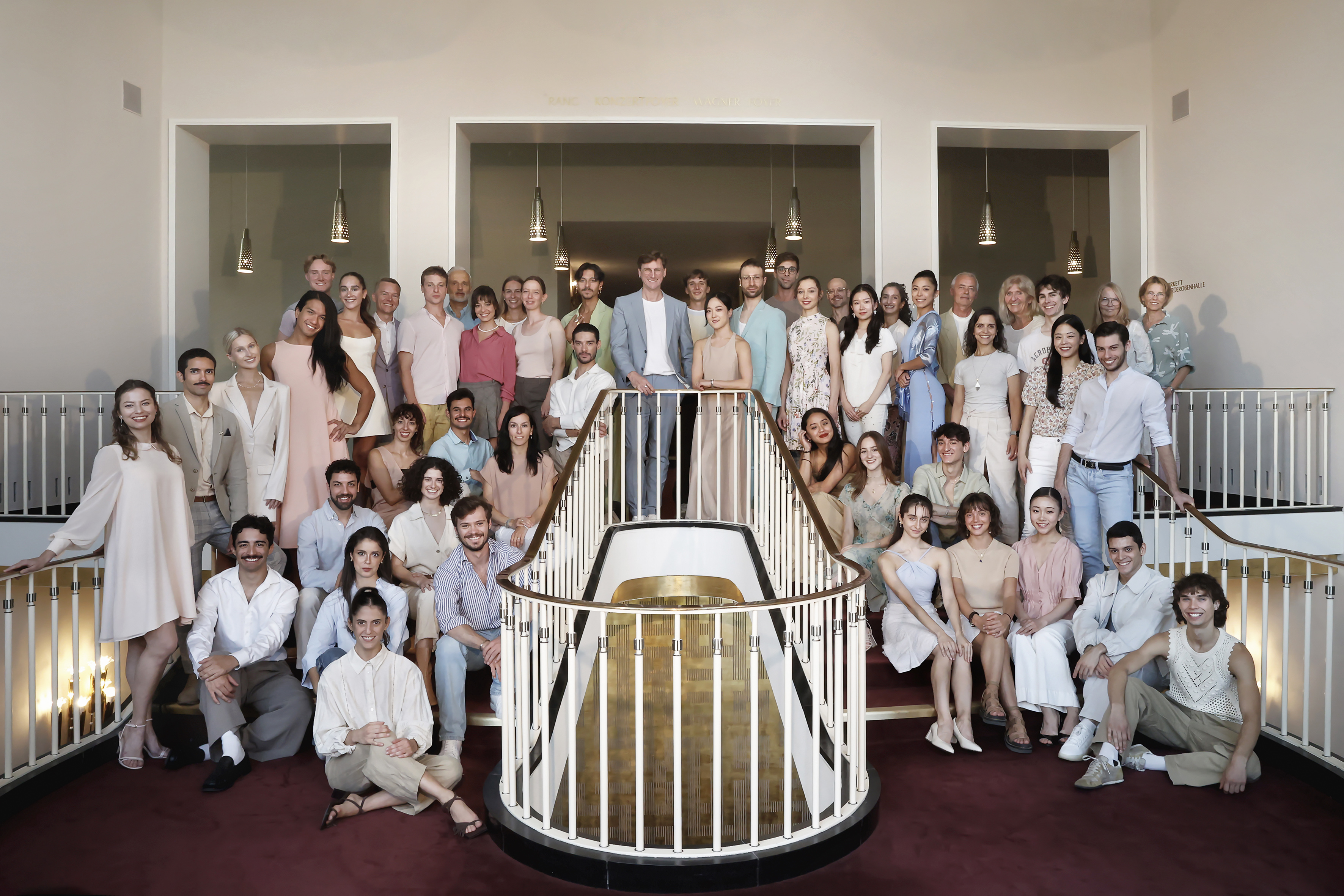
Leipzig Ballet, with its origins dating back to the late seventeenth century, is now widely recognised as one of the great international ballet companies. In the 1940s, Mary Wigman set a milestone with her choreography of Carl Orff’s Carmina Burana – with features of expressionist dance. Since the opening of the Neues Opernhaus (New Opera House) in 1960, virtually all the great narrative ballets have been performed, as well as new works.
1991 saw the start of a new era with the appointment of Uwe Scholz as Director of Ballet and Principal Choreographer. His first première in Leipzig, The Creation, which remains the flagship of the company in the neoclassical tradition, was followed by symphonic ballets such as The Great Mass, Symphony No. 7 in A major and Bruckner 8, which were staged as guest performances throughout Europe and in Hong Kong. Following Uwe Scholz’s death in 2004, the new Director of Ballet, Paul Chalmer, made his mark, inter alia, with a three-year Stravinsky cycle.
Since the 2010/11 season, Mario Schröder has taken over the company as Director of Ballet and Principal Choreographer. He previously held the same posts in Würzburg and Kiel, and has created well over 60 choreographies, including in Japan, the US, Russia, Mongolia and France as well as for great German venues such as the Deutsche Oper (German Opera) and Komische Oper Berlin (Berlin Comic Opera) and for the Aalto Ballett Theater Essen (Aalto Ballet Theatre in Essen). He worked with Ruth Berghaus, Maxim Dessau, Nikolaus Lehnhoff and Uwe Scholz and has won numerous choreography competitions.
Technology
In 1960, with the opening of the opera house, the stage architect Prof. Kurt Hemmerling handed over a state-of-the-art technical stage system to the Oper Leipzig. The auditorium has 1,247 seats, plus 12 seats in the boxes and 6 wheelchair spaces.
museum technical cabinet
The Oper Leipzig technical cabinet houses over 300 pieces of historical lighting equipment from over 150 years of theatre history. Initially founded in 1984 as a training cabinet for stage craftsmen and lighting technicians, the technical cabinet is now a place of collecting and preservation. Spotlights, signal boxes and colour changers found in numerous German theatres over the years are lovingly restored and cared for, their historical backgrounds researched and processed. In addition, the cabinet has extensive archive and documentation material that is used to systematically catalogue the exhibits and is being digitised step by step.