Lucio Gallo has been one of the most influential baritones on the international opera scene for more than four decades. In Leipzig, he is now devoting himself to Verdi's late stroke of genius, »Falstaff«. A conversation about curiosity as an artistic principle, about enjoyment and discipline – and about the art of never taking oneself too seriously.
»After a performance, I go back to being Lucio«
A conversation with star baritone Lucio Gallo about »Falstaff«, humour and curiosity
|
Sunday 05.10.2025

»Falstaff« is Verdi’s final opera - a work of wit and wisdom. What draws you to this role today, especially compared with Macbeth, Boccanegra, or Iago?
I find the role of Falstaff to be a sort of compendium of all the baritone roles written by Verdi. It’s the role with the most nuances and richness of color in Verdi’s repertoire - a real challenge for any interpreter.
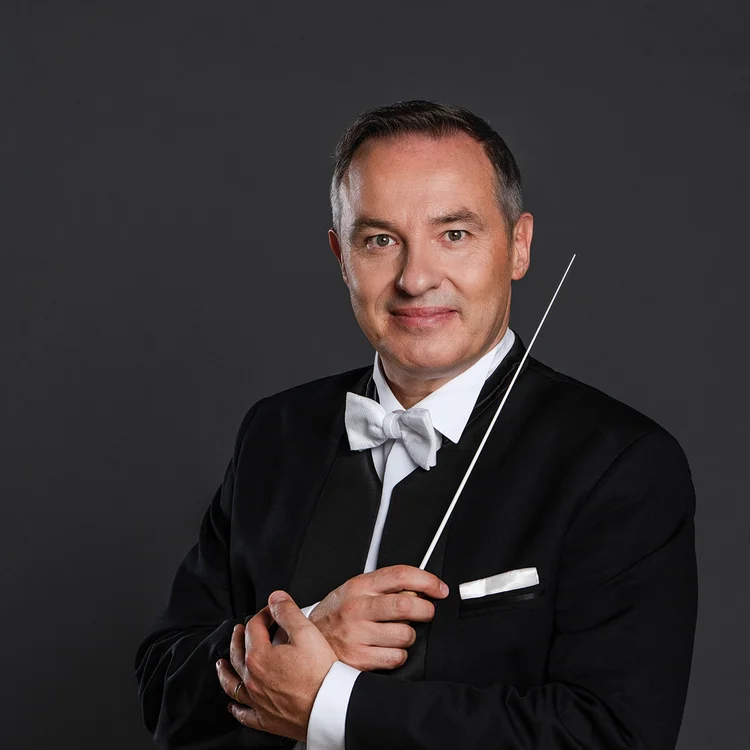
In Leipzig you are working with the new Music Director, Ivan Repušić. How does his leadership at the podium shape your interpretation of Falstaff?
Ivan is an excellent conductor. His careful coordination has highlighted subtle new details that have undoubtedly added value to my interpretation of the role. I believe the Leipzig Opera made a fantastic choice in appointing him as the orchestra’s director.
This new production is staged by Marlene Hahn. What is her central idea, and has there been a rehearsal moment that truly surprised you?
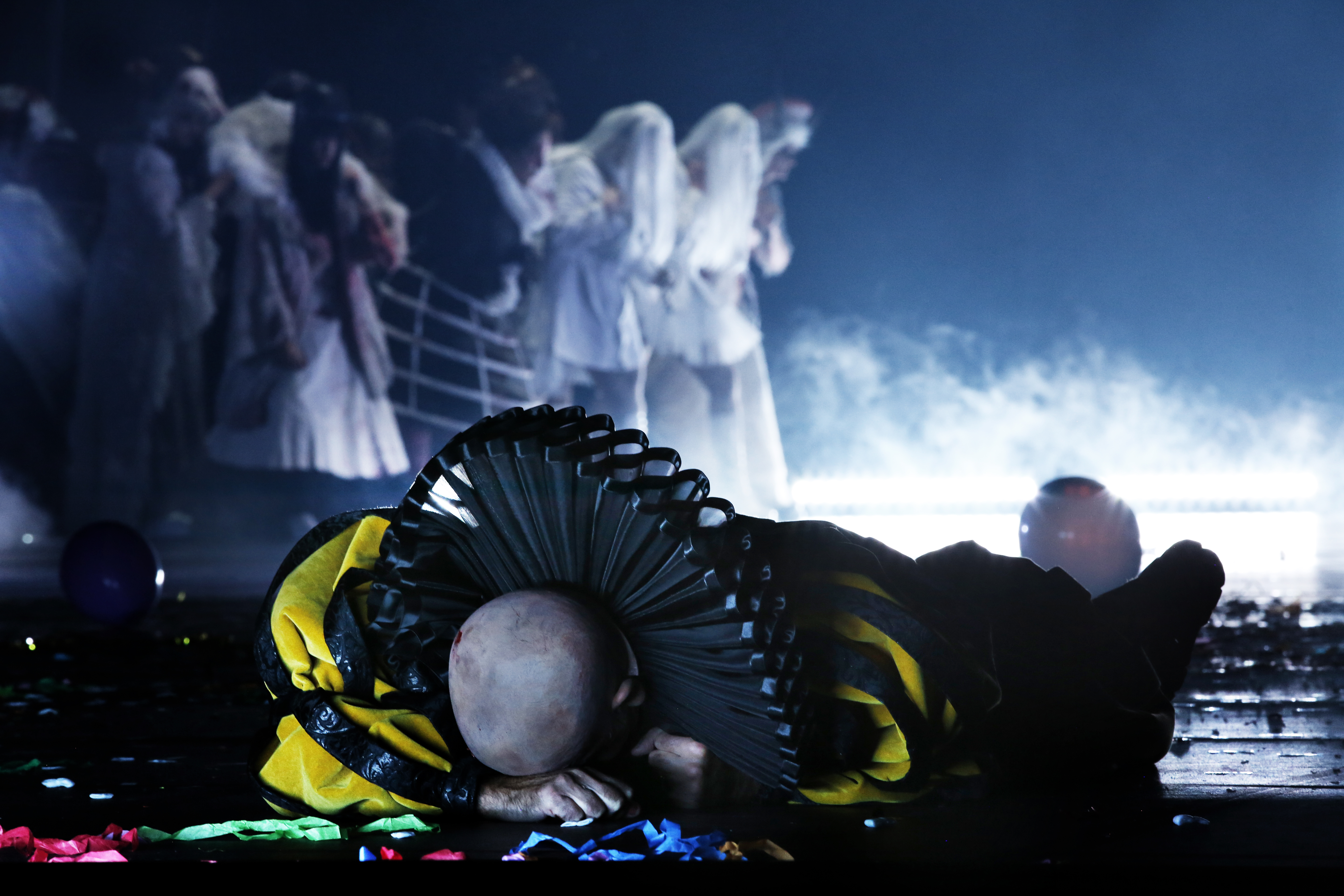
I worked very well with Marlene. She’s an intelligent and well-prepared professional. Her approach to the entire cast was delightful. What I found most intriguing about her direction was her desire to give Verdi’s masterpiece a very »choreographic« vision. She has brought »Falstaff« into the present day and taken care of the smallest details, giving the cast precise guidance for a successful ensemble performance of Shakespeare’s comedy.
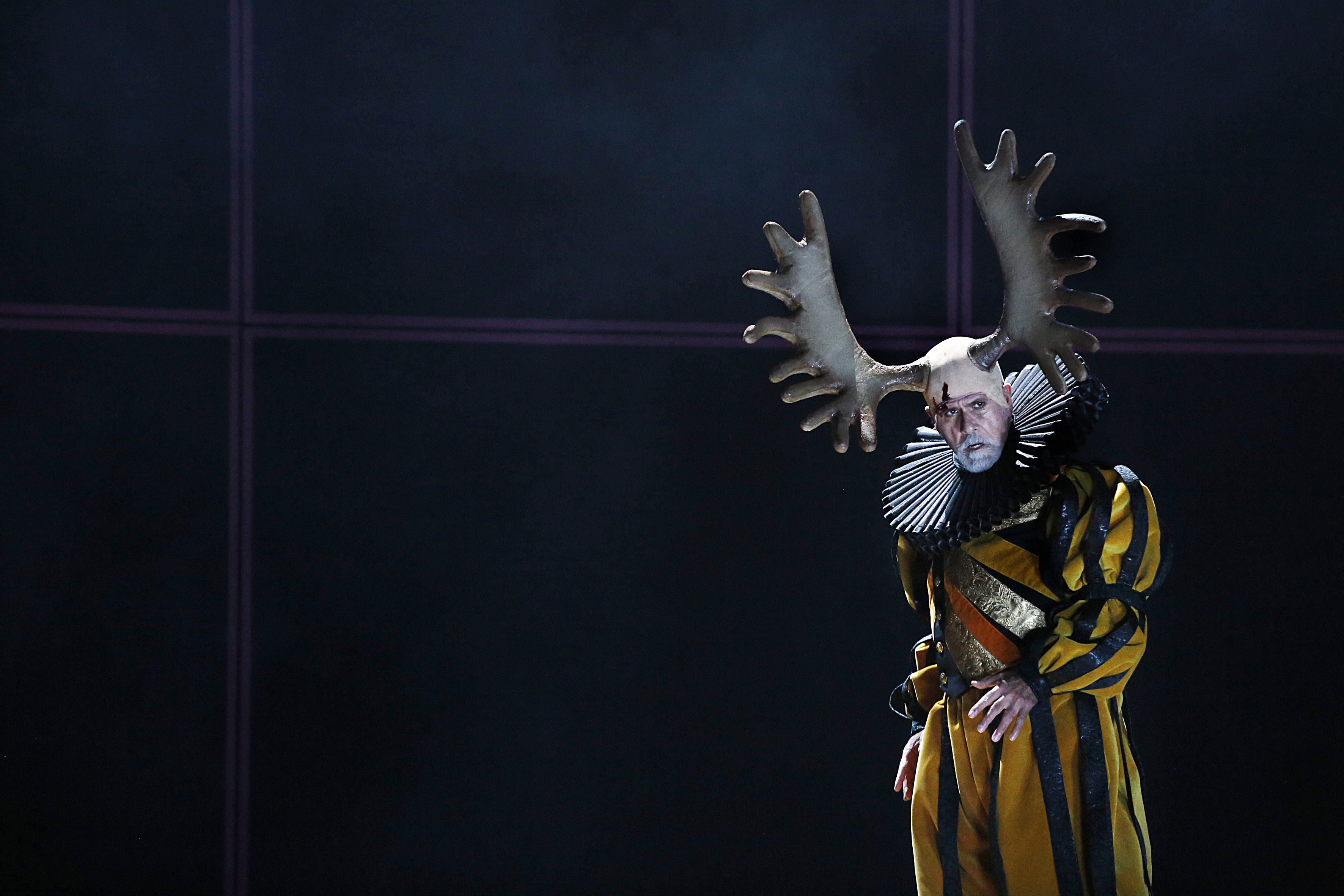
Falstaff is larger-than-life – vocally and emotionally. How do you embody that vitality without slipping into cliché?
After more than 200 performances divided between the roles of Ford and Falstaff, the secret to avoiding routine is to always remain curious about the approach – as if it were the first time every time.
You’ve portrayed characters full of contradictions – darkness, depth, and humor. Are there personal experiences that help you turn them into living people rather than »roles«?
A singer must also be an actor, and for that reason, I avoid contaminating the characters I play with my personal experiences. At the same time, I allow them to permeate my being and enrich me, as only art and music can.
»I never take myself too seriously.«
How would you describe your sense of humour offstage? And how much of Lucio Gallo’s own spirit finds its way into Falstaff?
I’ve had a great sense of humour ever since I was a teenager, and that’s exactly why I identify with the character of Falstaff. The big difference between him and me is that I never take myself too seriously.
Falstaff revels in pleasure – yet a singer’s life demands discipline. Where do you draw the line between enjoyment and the ascetic side of the profession?
A singer must maintain a certain personal integrity when handling their instrument, but at the same time, I believe that personal matters shouldn’t be compromised too much. I love living life in all its aspects – with seriousness and professionalism, but without sacrificing real life. After a performance, I go back to being Lucio and devote myself to my wife Diletta and my daughters Alma and Flaminia. They really help me remember that, after all, I’m »just a singer.« (laughs)
You have worked with many of the world’s great conductors and directors. Is there one artistic principle – a personal credo – that always guides you, wherever you are?
Being able to pursue a career under the guidance of some of the world’s most prestigious conductors has undoubtedly made me a better artist. But my artistic vision will always be tied to the person who was my mentor and a sort of spiritual guide: Maestro Elio Battaglia. If I can look back on a 43-year career performing in the greatest theaters of the world under true conducting idols, I owe it entirely to him and his invaluable teachings.
How do you experience the day of a premiere – from your first coffee to the moment you step on stage? Do you have any rituals?
I eat a good breakfast. For lunch, I regularly have spaghetti with butter and Parmesan, and I always do the same things – small, banal rituals that I won’t reveal out of pure superstition.
»Falstaff« reminds us not to take life too seriously. If you could offer one sentence of advice to your younger self, what would it be?
As a young man, I was decidedly impulsive. In hindsight, I’d tell that somewhat impetuous young man to moderate his behavior and look at the world with a more measured eye. However, that’s impossible – and ultimately, if I am who I am today, it’s also thanks to what I was then.
What do you hope the Leipzig audience takes home after this premiere night?
First of all, I hope the audience can fully appreciate our six weeks of work, that they are nourished by the splendid music of Verdi’s »Falstaff« , and that they take home a smile – truly believing that »Tutto nel mondo è burla« (»Everything in the world is a joke«).
- Giuseppe Verdi
- Premiere
Falstaff
Oper Sat 11.10.2025 | 19:00 | OpernhausEinführung 30 Min. vor Vorstellungsbeginn im Konzertfoyer
- Giuseppe Verdi
Falstaff
Oper Sun 19.10.2025 | 17:00 | OpernhausEinführung 30 Min. vor Vorstellungsbeginn im Konzertfoyer
- Giuseppe Verdi
Falstaff
Oper Sun 30.11.2025 | 17:00 | OpernhausEinführung 30 Min. vor Vorstellungsbeginn im Konzertfoyer. Mit Nachgespräch im Anschluss an die Vorstellung.
- Giuseppe Verdi
Falstaff
Oper Wed 17.12.2025 | 19:30 | OpernhausEinführung 30 Min. vor Vorstellungsbeginn im Konzertfoyer
- Giuseppe Verdi
Falstaff
Oper Sun 18.01.2026 | 17:00 | OpernhausEinführung 30 Min. vor Vorstellungsbeginn im Konzertfoyer